


Best Museums in Mexico for Expats: A City-by-City Guide
You've been in Mexico for a few months now, and it has probably already happened: someone mentions Frida Kahlo, Zapata, or a mural that "everyone knows," and you smile without fully getting the reference. That's part of the adventure of living somewhere new:every reference is an invitation to learn a little more about your new surroundings. Tourists check museums off a list in a week. You have months, even years ahead of you, so the question isn't how many museums you can see, it's which ones will actually help you understand the country you now call home.
MexicoCity has the country's largest concentration of world-class museums, but itisn't the only place worth your time. Below you'll find the museums worthknowing city by city, starting with the capital and moving through the citieswhere many expats in Mexico actually live and work.
Mexico City
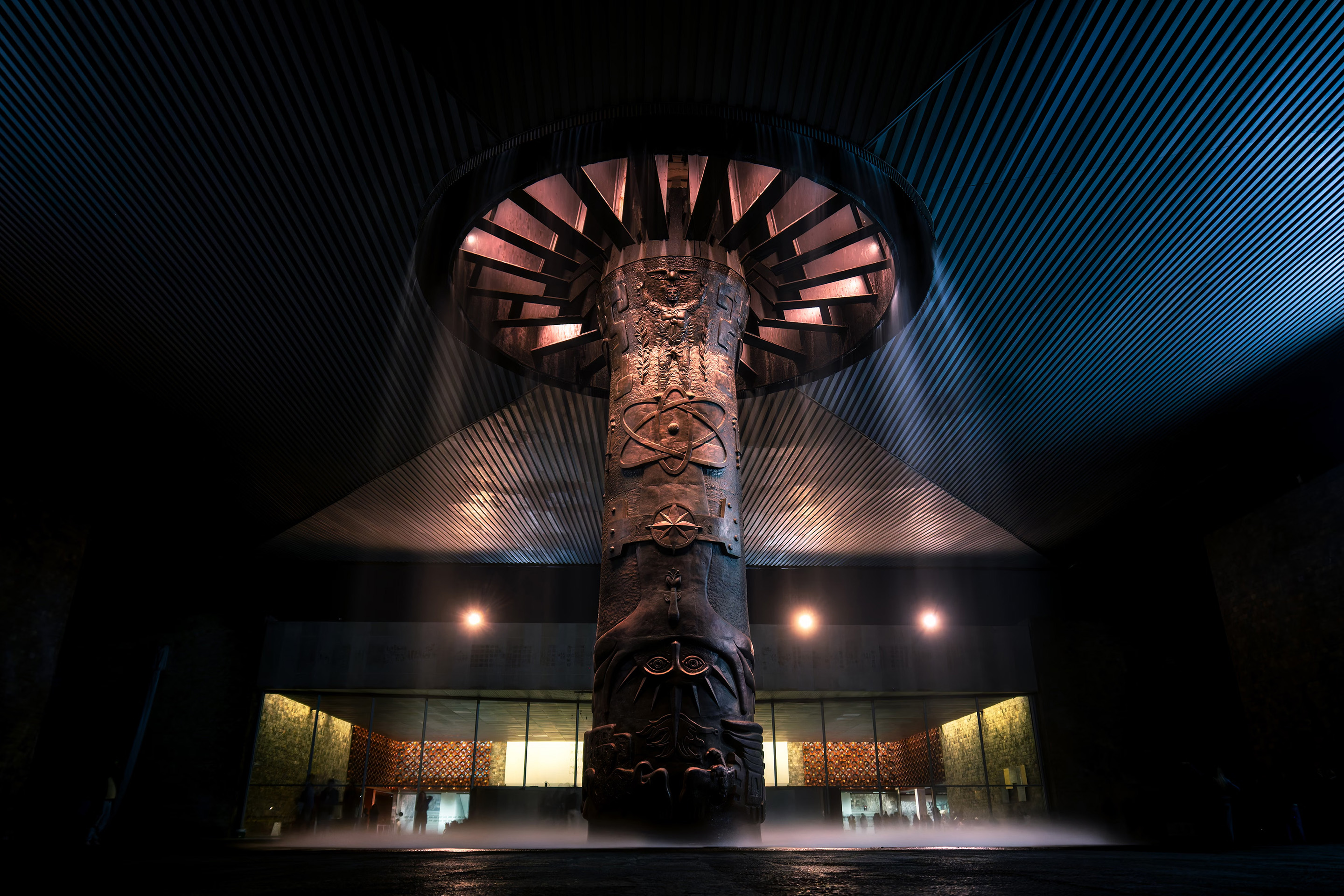
Start with the Museo Nacional de Antropología, in Chapultepec: twelve thousand years of history under one roof, with the Piedra del Sol, the Aztec calendar stone, as its centerpiece. Residents pay a reduced rate compared with foreign visitors, and entry is free on Sundays if you show a valid migratory document, so bring your residence card. Go on a weekday morning, before the school groups arrive, and remember that as an expat you can come back, so don't try to see everything at once. Check current hours and admission.
Then go and see where that story actually happened. The Museo del Templo Mayor, right beside the Zócalo, sits on the excavated ruins of the main temple of Tenochtitlan, the Aztec capital that Mexico City was built on top of. Walk the ruins first, then see what was found there, including the enormous Tlaltecuhtli monolith, and the Centro Histórico will read differently every time you cross it afterwards. Plan your visit.
In the same park as Antropología, the Museo Nacional de Historia occupies the Castillo de Chapultepec, once home to Emperor Maximilian and Empress Carlota and later to Mexican presidents. Its halls run from the conquest to the Revolution, which is exactly where Zapata, Villa, Juárez and the Niños Héroes come in: the names behind so many of the streets, metro stations and public holidays you'll come across every week. The views down Paseo de la Reforma area bonus. Plan your visit.
When you want a more personal side of the country, the Casa Azul, the Frida Kahlo Museum in Coyoacán, gives you context for all those Frida references you'll keep hearing on t-shirts, mugs and in everyday conversation. Tickets are sold only through the museum's official website, never at the door, and the daily quota fills up fast, so book a few days ahead. If weekdays are your only window, look out for the Noches Azules evening sessions on Thursdays, booked separately, which make for an easy after-work visit. Book on the official site.
Pair it with the Museo Anahuacalli, a short drive south, still in Coyoacán. Diego Rivera designed this volcanic-stone building himself to house his collection of pre-Hispanic pieces, and it's one of the most striking buildings in the city: the clearest place to see how deeply Mexico's ancient past shaped the artists who defined its modern identity. Plan your visit.
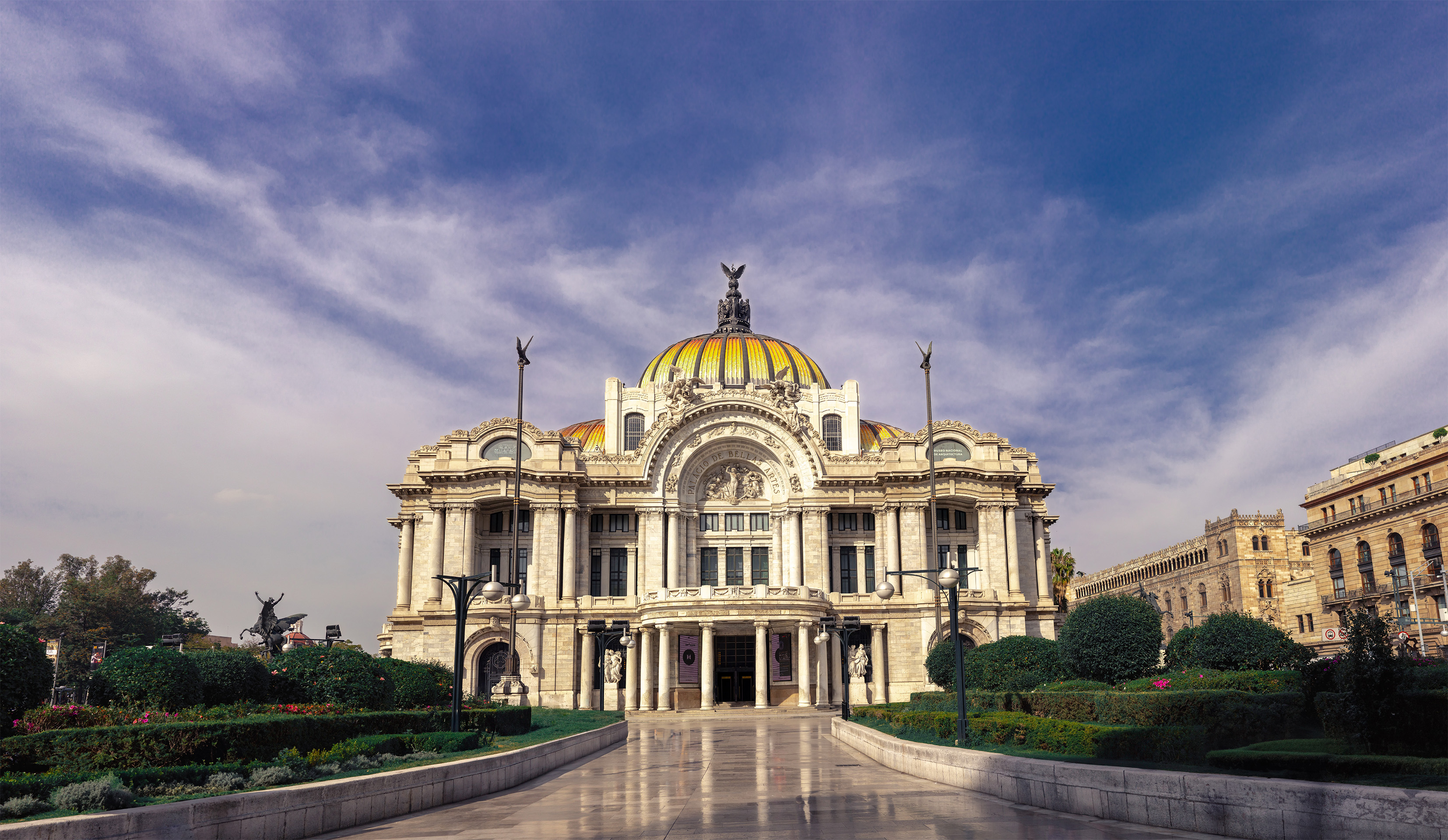
And if your week is more office than free weekends, two museums make for a perfect long lunch break: the Palacio de Bellas Artes, where murals by Diego Rivera, Siqueiros and Orozco cover the walls of a marble palace just steps from the Bellas Artes metro station (the murals are inside the museum, so you'll need a ticket; see the museum's site), and the Museo Soumaya, in Polanco, whose free collection swings from Rodin to Dalí inside a curved, silver-plated building that's become an icon of the city skyline in its own right. No ticket needed, you just walk in. Plan your visit.
Monterrey
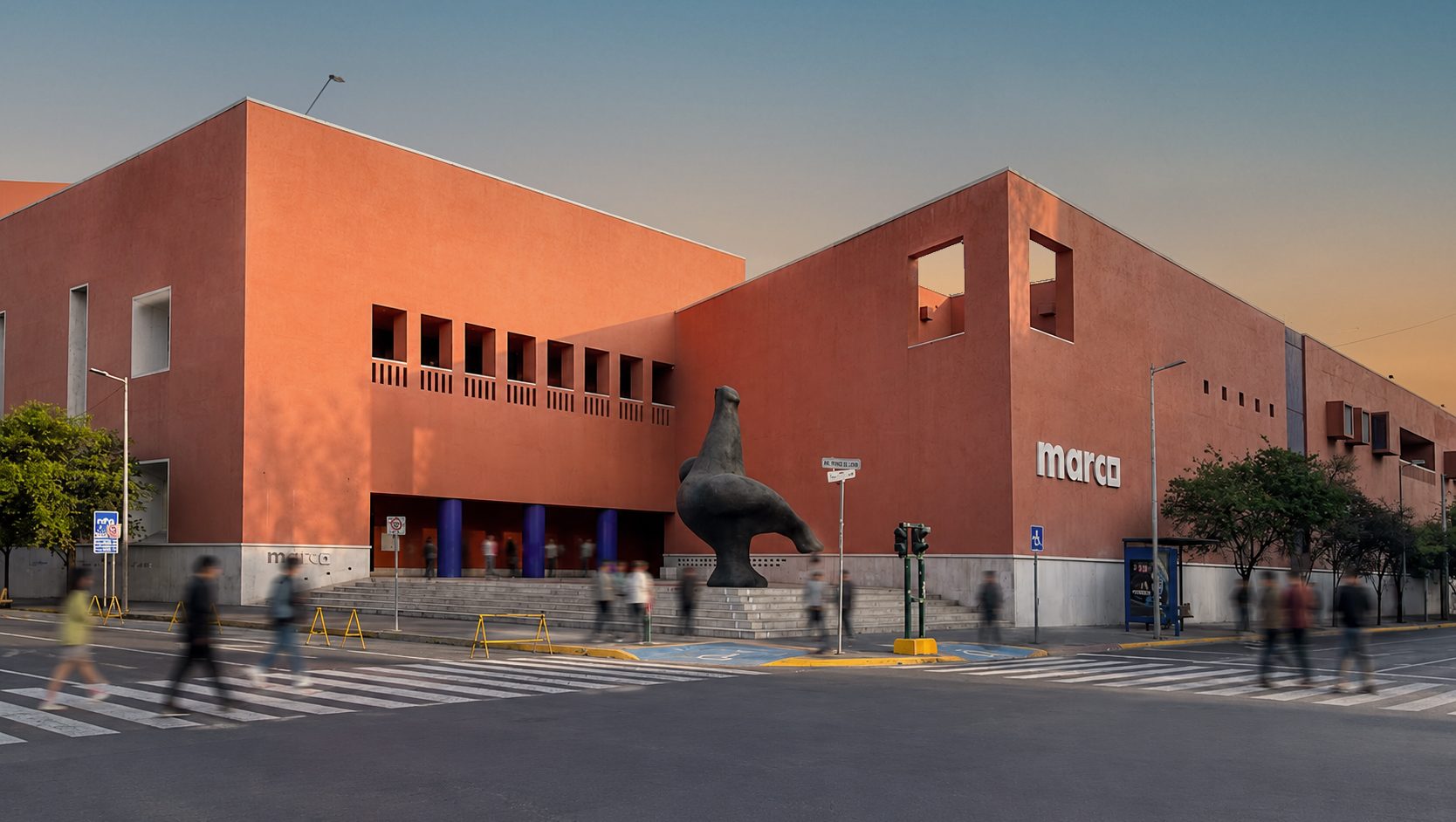
In Monterrey, you don't need to travel to the capital for a world-class museum day. MARCO (Museo de Arte Contemporáneo), on the Macroplaza, has been one of the leading contemporary art spaces in Latin America for 35 years, with a rotating program of major exhibitions inside a building designed by Ricardo Legorreta that's a reason to visit on its own. Juan Soriano's monumental dove at the entrance has become one of the city's symbols. It's proof that "Mexico's important museums" aren't the same thing as "the capital's museums." See what's on.
A short walk away, at the start of the Paseo Santa Lucía, the Museo de Historia Mexicana is one of the best places in the country to get the big picture: a clear, well-designed walk from ancient Mexico through Independence and the Revolution to the modern country. It's part of the 3 Museos complex, alongside the Museo del Noreste, which tells the story of the region you now live in, and it regularly offers free-entry days. Plan your visit.
To understand Monterrey itself, head to Horno3 in Parque Fundidora, a former blast furnace of the steelworks that helped make Monterrey Mexico's industrial capital, now reborn as a museum of steel and science. Don't miss the ride to the top of the furnace for a view across the city to the Cerro de la Silla. If you've relocated here for work, it's the backstory of the city's industrial culture in a single afternoon. Plan your visit.
Guadalajara
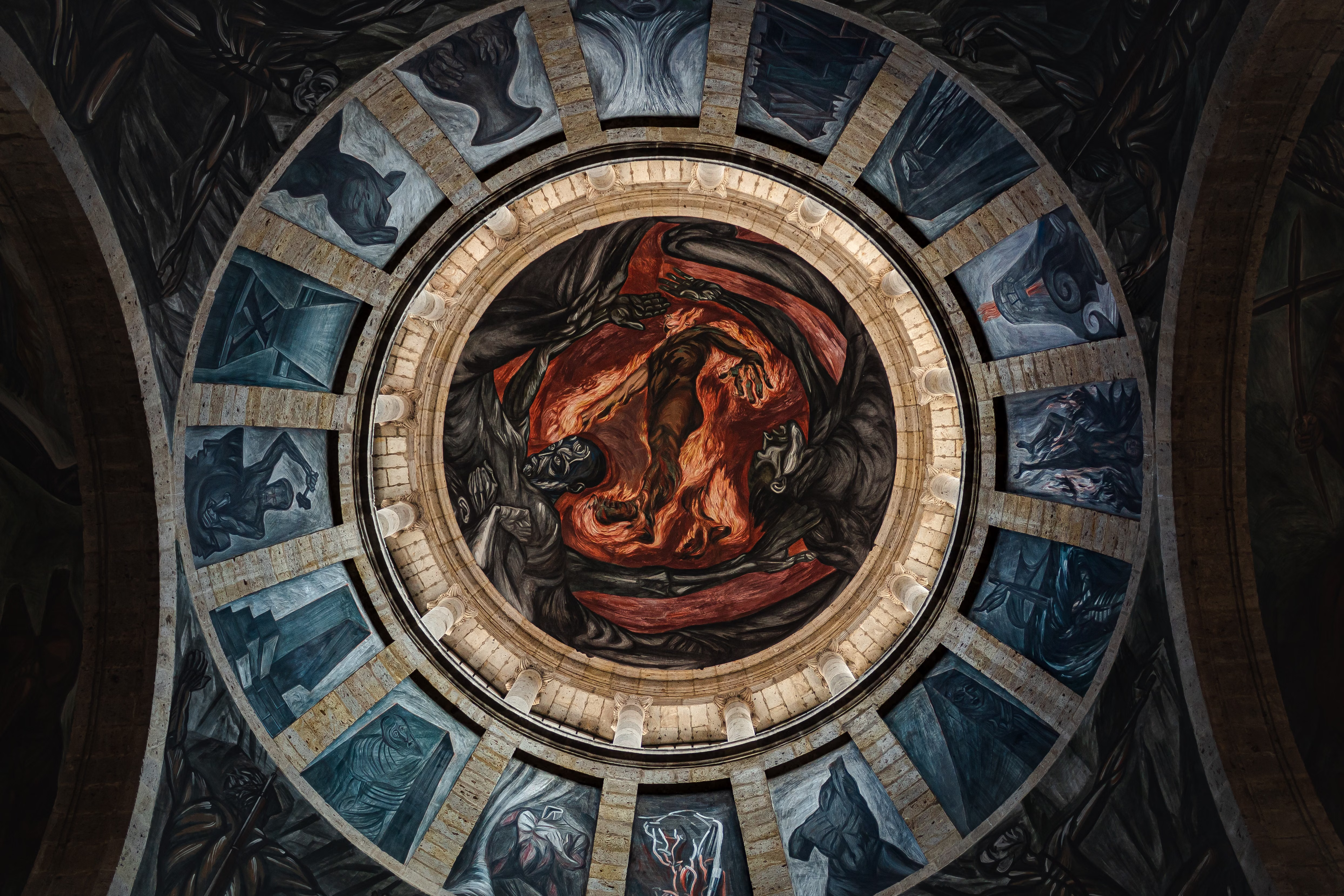
In Guadalajara, the must-see stop is the Instituto Cultural Cabañas, a UNESCO World Heritage Site, mainly for the mural José Clemente Orozco painted on its dome: El Hombre de Fuego (Man of Fire), one of the most striking works of Mexican muralism. It's best seen from the benches beneath the dome, where visitors lie back to take it in fully. It's a direct way to understand why Jalisco considers itself the birthplace of so many of the country's cultural movements. Plan your visit.
The Bajío: León, Querétaro and Guanajuato
If you live in León, Querétaro or anywhere along the Bajío's industrial corridor, the city of Guanajuato makes an easy day trip, and the Alhóndiga de Granaditas is the place to start. This former grain warehouse was the scene of one of the first battles of the War of Independence in 1810, and today it houses the Museo Regional de Guanajuato, with murals by José Chávez Morado over its main staircase. It's the best way to understand why this region calls itself the cradle of Mexican independence, and why September 16 matters so much here. Plan your visit.
Puebla
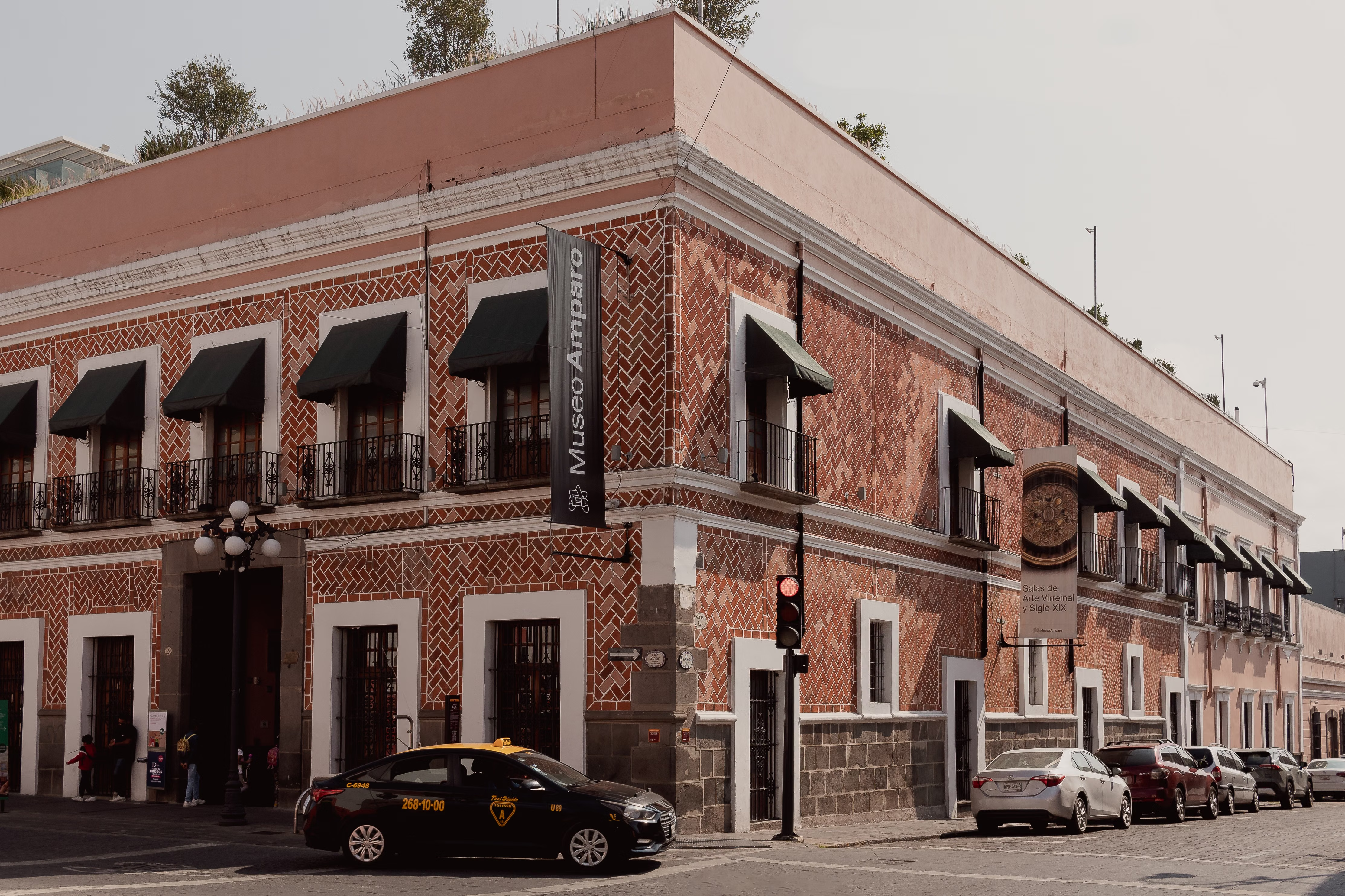
In Puebla, the Museo Amparo combines pre-Hispanic and colonial pieces with contemporary art inside a restored colonial building, and its terrace offers one of the best views of the Popocatépetl and Iztaccíhuatl volcanoes on a clear day. It's also a good introduction to Puebla baroque, that ornate style of talavera tile and gold leaf you'll later recognize in churches and buildings all over the city. Unlike most museums in the country, it closes on Tuesdays rather than Mondays, and it offers free entry on Sundays and to Puebla residents. Check current hours and admission.
Mérida and the Yucatán
In Mérida, the Gran Museo del Mundo Maya is the essential introduction to a culture that still shapes daily life across the Yucatán Peninsula, from the Maya words you'll hear in the market to the food on your table. Its building, inspired by the sacred ceiba tree, holds more than a thousand Maya pieces. Visit before you head to Chichén Itzá or Uxmal, and the sites will make far more sense. Plan your visit.
Oaxaca
In Oaxaca, the Museo de las Culturas de Oaxaca occupies the former convent of Santo Domingo de Guzmán, one of the most beautiful colonial buildings in the country. Its highlight is the treasure from Tomb 7 at Monte Albán, one of the richest archaeological finds in the Americas, and the ethnobotanical garden next door is a fascinating walk through the plants behind Oaxacan food, medicine and crafts. Plan your visit.
Before you go: a few practical notes
Mondays are for planning, not visiting. Almost every museum in Mexico closes on Mondays, regardless of the city. Museo Amparo in Puebla is the exception: it closes on Tuesdays instead.
Carry your residence card. Many federal museums run by INAH, including Antropología, Templo Mayor and the Castillo de Chapultepec, are free on Sundays for Mexican nationals and foreigners with a valid migratory document, and several museums offer reduced rates for residents. If you're still working through your paperwork, our guide to Mexican temporary residency requirements is a good place to start.
Book ahead where it matters. The most popular museums, like the Casa Azul, sell tickets only online, and weekend slots go first.
Check before you go. Hours, admission and free days change from time to time, so we've linked each museum's official site above for the latest details.
Quick answers
Which day are museums closed in Mexico? Most museums in Mexico close on Mondays, including the Museo Nacional de Antropología, the Casa Azul, MARCO and the Instituto Cultural Cabañas. The best-known exception is the Museo Amparo in Puebla, which closes on Tuesdays instead.
Are museums in Mexico free on Sundays? Many are. Federal museums run by INAH, such as the Museo Nacional de Antropología, the Templo Mayor and the Castillo de Chapultepec, are free on Sundays for Mexican nationals and for foreigners with a valid migratory document, such as a residence card. The Museo Amparo is also free on Sundays, and the Museo Soumaya is free every day. Policies vary by museum, so check the official site before you go.
What is the best museum in Mexico City? For most new comers, the Museo Nacional de Antropología is the essential first visit: twelve thousand years of history under one roof, including the Aztec Sun Stone. From there, the Templo Mayor, the Castillo de Chapultepec and the Casa Azul add the history, politics and personal stories that complete the picture.
Living here, not just visiting
One of the best things about living in Mexico is that you don't have to see it all at once. You get to go back, bring visitors, and understand a little more each time. Take advantage of that, starting with whichever museum is closest to you.
And if you're still settling in, the ANCHOR team is here to help with more than paperwork, from getting your residence card in hand to finding your feet in a new city, so your Sundays can be spent in a museum rather than in a queue. Get in touch with us.


